
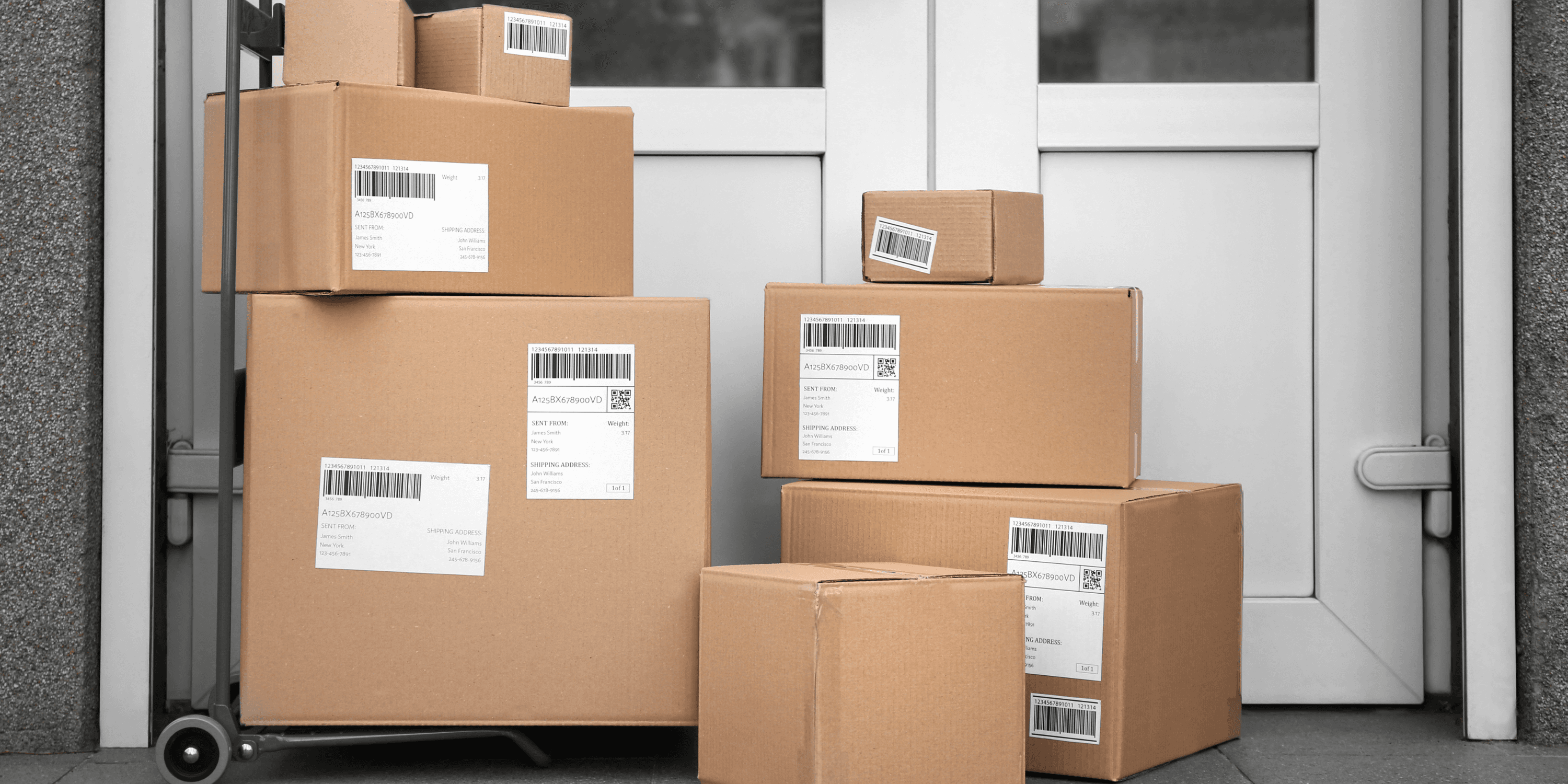
Shipping is usually the second-largest line item on an ecommerce P&L after cost of goods. And in Canada, it's the line that quietly eats your margin while you're focused on ad spend and conversion rates. A brand doing 2,000 orders a month at an average parcel cost of $14 is spending $28,000 — shave even $2 off each label and you've put $48,000 back into the business this year.
The honest answer is most Canadian DTC brands are overpaying by 15–25% on shipping, and it's almost never one big mistake. It's five small ones stacked on top of each other. Here's what actually moves the needle when you want to reduce shipping costs in Canada — the tactics we use every day with the brands we fulfill for out of Surrey, BC.
Stop Shipping From One Warehouse on the Wrong Coast
If your inventory sits in Toronto and 40% of your orders go to BC, Alberta, and the Prairies, you're paying for a five-zone parcel every time. Canada Post and Purolator both price by zone, and a 2 lb parcel from Mississauga to Vancouver runs roughly $18–22, while the same parcel from Metro Vancouver to a local address is closer to $11–13. That's a 40% delta on identical freight.
Zone-based fulfillment — placing inventory closer to where your customers actually live — is the single biggest lever on Canadian shipping costs. For most brands the math works at around 800–1,000 orders a month: that's the volume where splitting inventory between an eastern and western warehousing location saves more than the added storage and replenishment freight costs.
Use Zone Skipping for Eastern Canada Volume
Zone skipping is the move most operators forget about. Instead of dropping 300 parcels into Canada Post in Vancouver and paying full zone-five rates to Ontario, you line-haul them as a consolidated freight shipment to a Toronto injection point and induct them into the local network there. Each parcel ships as a zone-one or zone-two label.
On a typical skid of 200–250 parcels heading to Ontario and Quebec, brands save $3–6 per parcel after the line-haul cost is amortized. The trade-off is one extra transit day, which most ecommerce buyers don't notice if your product page promises 3–5 business days. We run weekly zone-skip departures for clients who hit minimum volumes — ask about it if you're shipping more than 500 eastbound parcels a week.
Negotiate Carrier Rates — Properly
Every carrier rep will quote you a discount off published rates. That number is meaningless on its own. What you need to look at is your effective cost per parcel by weight band and zone, including every accessorial: residential surcharge, fuel, beyond-area, address correction, dim-weight uplift. These add 18–30% to a base rate and are where carriers make their margin back.
A few things that actually work when you're negotiating with Canpar, Purolator, GLS, or UBI: bring 90 days of clean shipping data sorted by weight and postal code, ask for tiered volume rebates rather than just a flat discount, and push back on minimum charges — those crush you on lightweight orders. If you ship through a Canadian 3PL, you're piggybacking on the warehouse's aggregated volume, which usually beats what a sub-10,000-parcel-per-month brand can negotiate solo.
- Audit your invoices monthly — carriers misbill 3–5% of parcels. Refunds for late deliveries and incorrect dim weights add up.
- Compare effective rates, not headline discounts — a 40% discount with high accessorials can cost more than a 25% discount with clean billing.
- Use multiple carriers — route Canada Post for residential lightweight, Purolator or Canpar for heavier B2B, and a regional like GLS where they're competitive.
Fix Your Packaging Before You Touch Anything Else
Carriers bill on dimensional weight using a divisor of 139 (cubic inches per pound) for most Canadian domestic services. A 12x10x8 box weighing 1.5 lb actually bills as a 7 lb parcel because of dim weight. If you're shipping a t-shirt in that box, you're paying for air.
The fix isn't glamorous: right-size your cartons, stock 4–6 box sizes instead of 2, and use polymailers for anything soft and non-fragile. One apparel brand we onboarded last year cut their average billable weight from 4.2 lb to 2.6 lb just by switching 60% of their orders into polymailers. That was an 18% reduction in shipping spend with zero carrier renegotiation. Good pick and pack operations think about packaging as a cost-engineering problem, not just a brand-experience one.
Shorten the Last Mile With a Canadian Fulfillment Centre
If you're a US brand shipping into Canada from Buffalo or Bellingham, every order is a cross-border parcel. That means duties, GST/HST collection, CBSA clearance per shipment, and last-mile rates that look like international postage. Customers see longer transit times and surprise fees at the door — which drives refusals and chargebacks.
Bringing inventory across in bulk through a customs broker, clearing it once, and fulfilling domestically changes the economics completely. You pay duty and GST on the wholesale value once, not on every retail order. Your parcel shipping rates drop to domestic Canadian zones. And delivery promises move from 7–14 days to 2–5. We handle the import side through our customs brokerage team and store the goods in our Surrey facility, 30 minutes from the BC-US border, so the crossing and putaway happen in the same week.
- One customs entry instead of hundreds — clear a full container through CBSA once and avoid per-parcel brokerage fees of $15–30.
- Domestic carrier rates — replace UPS Standard cross-border with Canada Post or Canpar at a third of the cost.
- Faster delivery, fewer refusals — Canadian buyers expect Canadian transit times, and refused parcels cost you the round-trip freight plus restocking.
Let's Talk Fulfillment
Reducing shipping costs isn't one big move — it's stacking five or six small ones until the math compounds. If you want a second set of eyes on your current shipping spend, we'll pull apart your numbers and tell you honestly where the leaks are. Get a free quote on fulfillment and parcel rates out of our Surrey facility, or book a consultation with our team to walk through zone strategy, packaging, and customs for your specific SKU mix.